
COMPANY
Finley
PROJECT TYPE
0→1 feature
ROLE
User research
Product strategy
Product design
TEAM
Product Manager
Engineering
Post Sales
OVERVIEW
Redesigning onboarding to support self serve setup
The onboarding experience was rebuilt to guide customers through facility setup, configuration, and validation without relying on post sales support. The workflow organizes data entry into a predictable flow, reduces manual work across systems, and shortens the time from contract signing to activation.
THE PROBLEM
Manual processes slowed onboarding and made setup difficult to scale
Onboarding relied on post sales staff entering data across multiple systems, which increased errors and made implementations slow. New users struggled because key steps depended on institutional knowledge instead of clear guidance. Limited visibility into progress led to repeated follow ups, and error correction often required manual fixes through email chains.
THE SOLUTION
Built a self serve onboarding flow to support larger customers
The onboarding experience was redesigned to guide customers through setup, configuration, and validation without relying on post sales support. As the company began working with larger customers such as lenders and banks, they expected a structured self serve process. Shifting setup tasks to customers allowed the post sales team to support more accounts while reducing manual work.
USER RESEARCH
Internal tools made first time setup slow for customers
Interviews with the post sales team showed the existing admin tool was designed for internal staff rather than customers. Hidden logic and inconsistent patterns made first time setup error prone and slow. Because onboarding was nonlinear, the workflow needed to balance flexibility with clear guidance.
DESIGN APPROACH
Defined a guided flow to support setup, configuration, and validation
The onboarding flow was restructured into a guided sequence that reduced context switching and made setup easier to complete accurately. Instead of navigating scattered screens and internal tools, users moved through a clear path that helped them establish the facility, select only the modules they needed, configure each module’s details, confirm everything was correct, and apply their updates so the system reflected the latest setup.
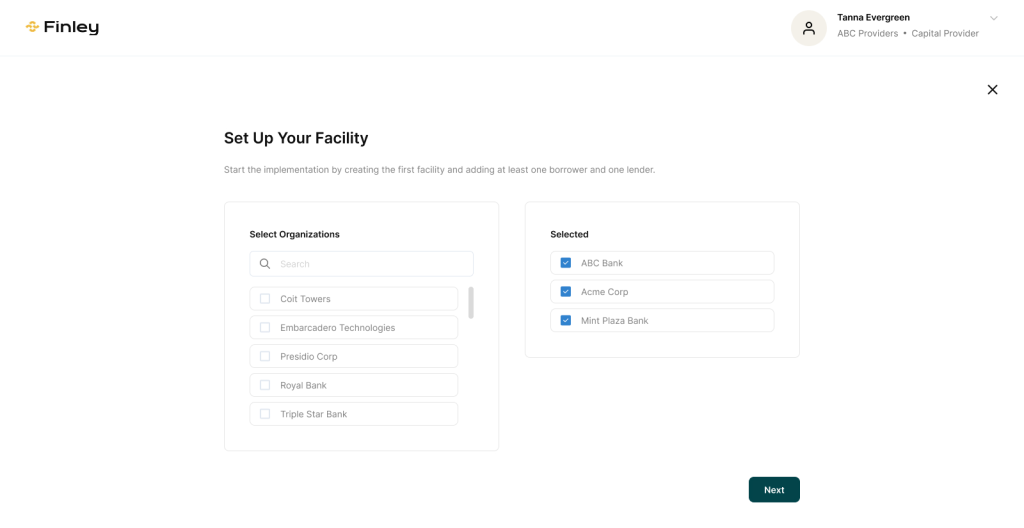
Create a new facility
Users start by creating the facility and selecting the organizations involved so the system has the basic entities needed for setup.
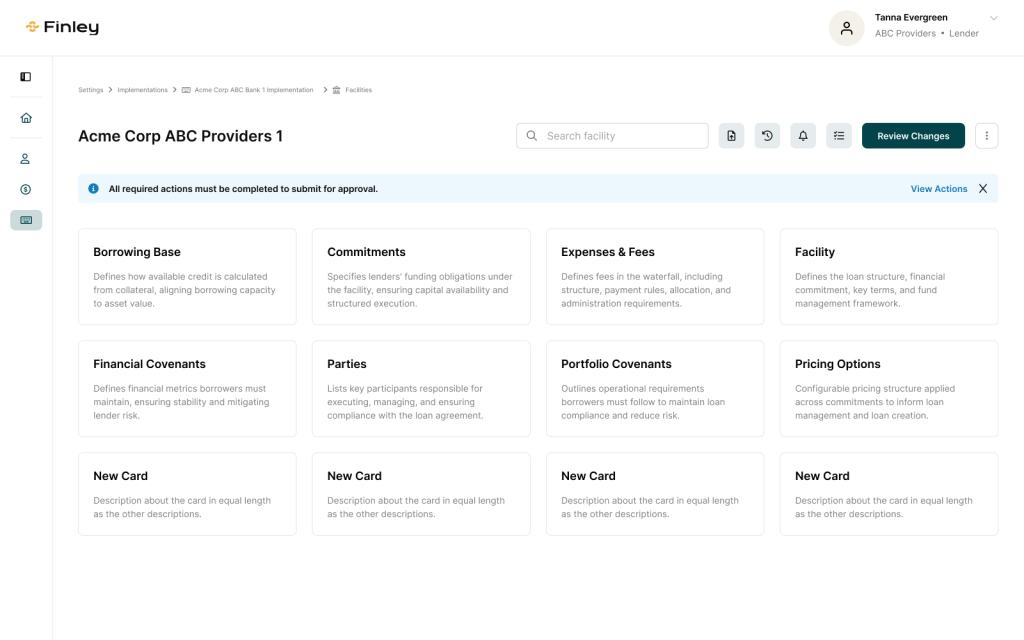
Customize the facility
Users choose the modules required for their deal, allowing each facility to include only the components that apply to its structure.
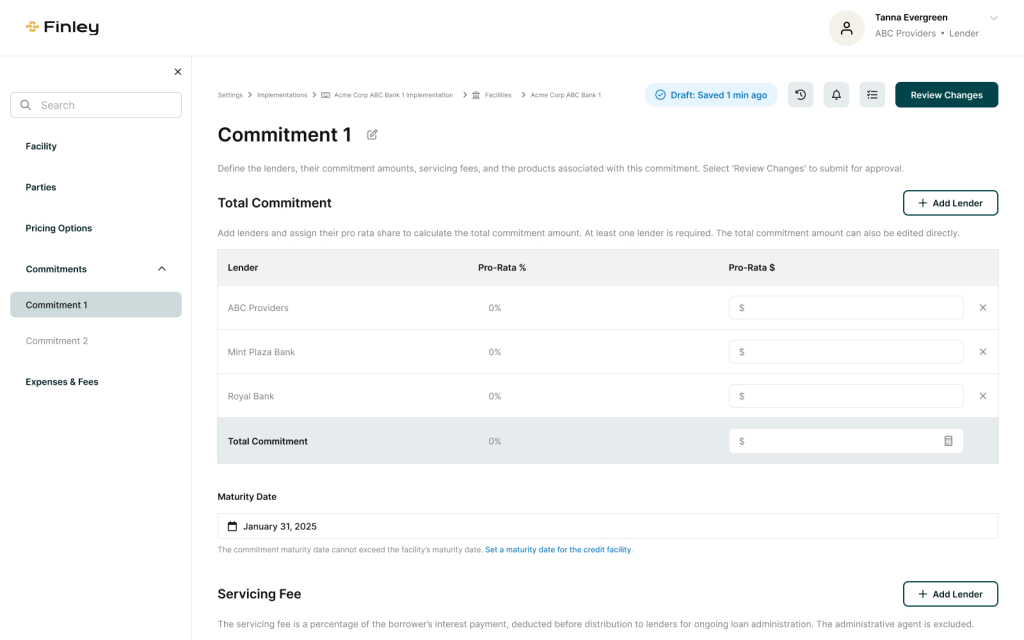
Configure the facility
Users define the details within each module, entering values and settings that shape how the facility will operate.
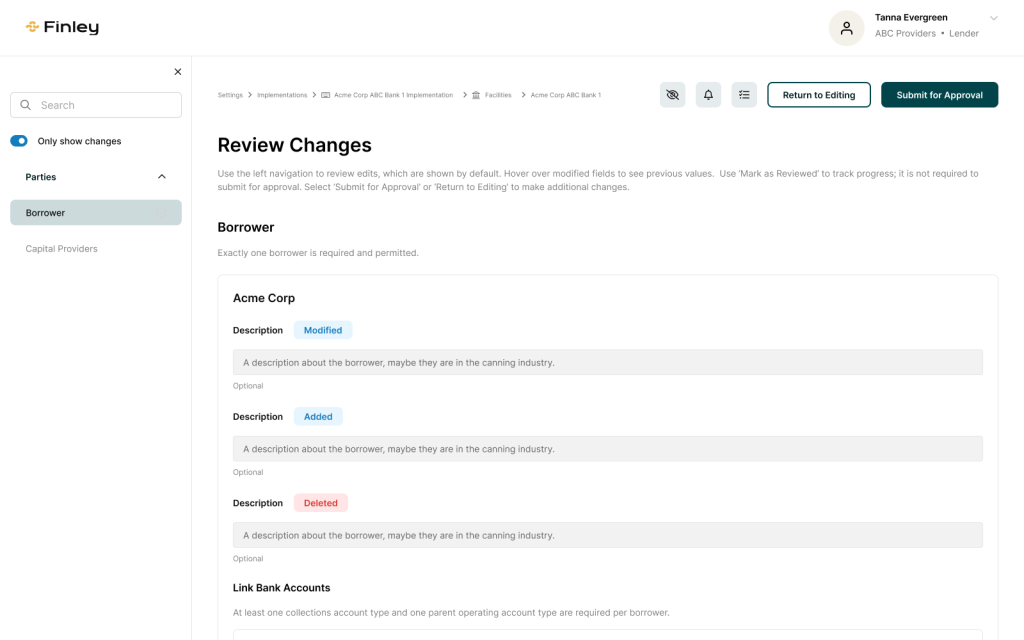
Review
Users check the full configuration to confirm all required information is complete and accurate before applying changes.
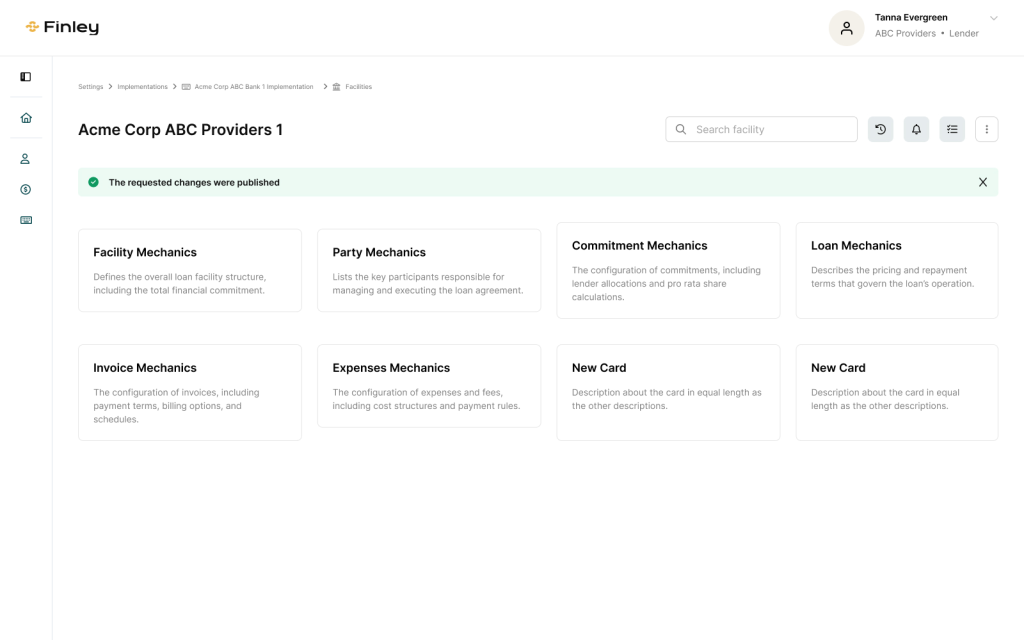
Save and update
Users save the configuration so the app reflects the latest details and the implementation can move forward.
OUTCOMES
Faster onboarding and clearer configuration for customers
- Shortened implementation time from weeks to days through automation and guided setup.
- Reduced reliance on post sales support by enabling self serve onboarding.
- Improved accuracy and transparency for customers managing complex configurations.
REFLECTIONS
Balancing short term delivery with long term scalability
We needed to move quickly without creating long term complexity. Reusing existing systems where possible helped us launch on time, and adding new backend endpoints only where they had clear impact kept the product flexible for future iterations.
We needed to deliver quickly while minimizing backend dependencies. To accelerate launch, we reused existing systems where possible and introduced new backend endpoints only for high-impact workflows, ensuring short-term delivery without blocking long-term scalability.