COMPANY
Finley
PROJECT TYPE
0→1 product
Banking partnership
ROLE
Product definition
User research
Product design
TEAM
CTO
Engineering
GTM
OVERVIEW
Designing a servicing platform for scale
Syndicated loans require a lead bank to manage notices and servicing activity across multiple lenders. Valley Bank partnered with Finley because they wanted more direct ownership of their servicing operations and needed a system that could support future scale.
THE PROBLEM
Fragmented processes made servicing slow and hard to scale

The bank relied on a vendor to generate notices so any edit required multiple back and forth steps. This created delays and made it difficult for the bank to support growing loan volume.
SOLUTION
Bring servicing fully in house to support scale

Replacing the vendor software allows notices to be generated and managed directly in one system. Automating notice generation from a daily file containing updated loan balances and activity streamlines how the servicing team reviews and updates information and creates predictable workflows that reduce manual effort.
MARKET OPPORTUNITY
Positioning the servicing platform for broader adoption
Building a centralized servicing platform created an opportunity to offer lenders and participants real time visibility into the loan lifecycle, rather than relying on notices triggered after an event. This expanded the value of the platform beyond the initial bank partnership and positioned Finley to serve additional lenders and borrowers.
TECHNICAL CONSTRAINTS
Designing within bank level systems and servicing requirements
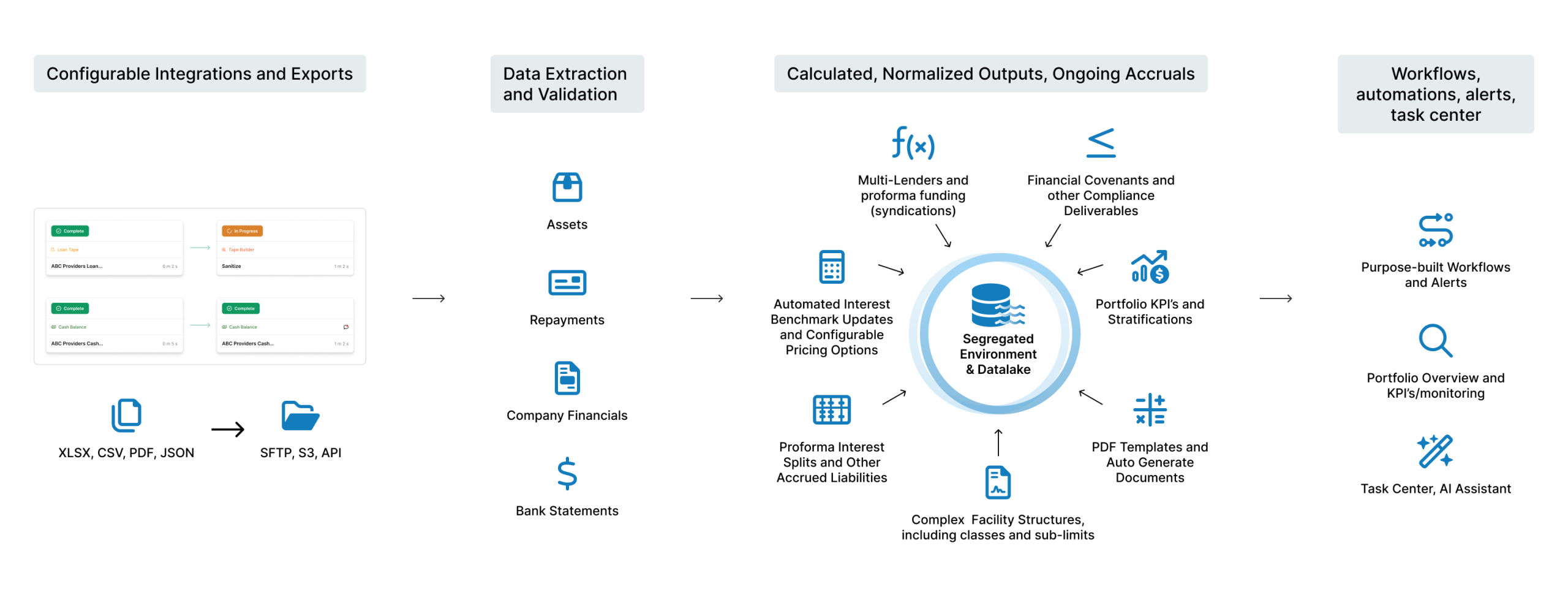
The servicing platform needed to work within the bank’s security standards, audit expectations, and Finley’s component architecture.
MY ROLE
Sole designer responsible for the servicing model, IA, workflows, and reusable patterns.
- Defined the servicing model and overall product structure.
- Designed workflows for notices, events, and servicing tasks.
- Created reusable interaction patterns and servicing views for scalability.
- Iterated on designs based on findings from internal reviews.
USER RESEARCH
Identified where servicing workflows broke down and defined core requirements.
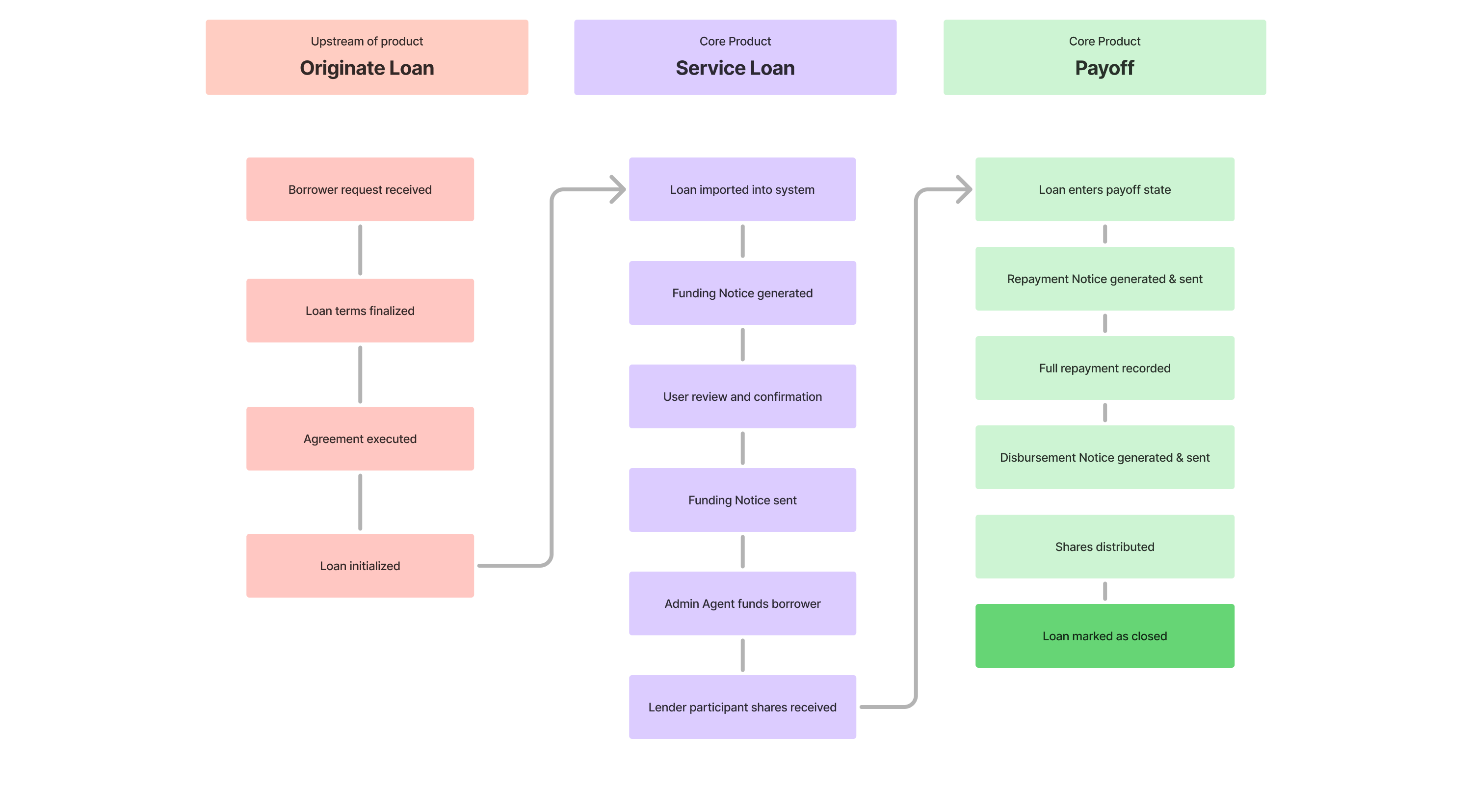
I evaluated existing servicing workflows to understand where the process broke down and to define the core product requirements. This work helped shape the servicing model that guided how the product organizes and processes servicing tasks and led to the creation of reusable patterns that made servicing actions more consistent, predictable, and easier to understand. I also tested early prototypes with users to confirm the model, gather feedback on the workflows, and refine the patterns before moving into detailed design.
DESIGN EXPLORATION
Explored workflow structures that supported clear and consistent servicing actions
Designing the experience for how a user might create a new loan request, testing the sequence of actions and what information should appear at each step.
Explored the information architecture, how users moved through servicing tasks, and which workflow structures best supported those actions. Also tested variations in UI layout to find the clearest way to present complex information and evaluated tradeoffs based on how common each workflow was and the time required to build it.
DESIGN DECISIONS
Design consistent, accessible components for all users
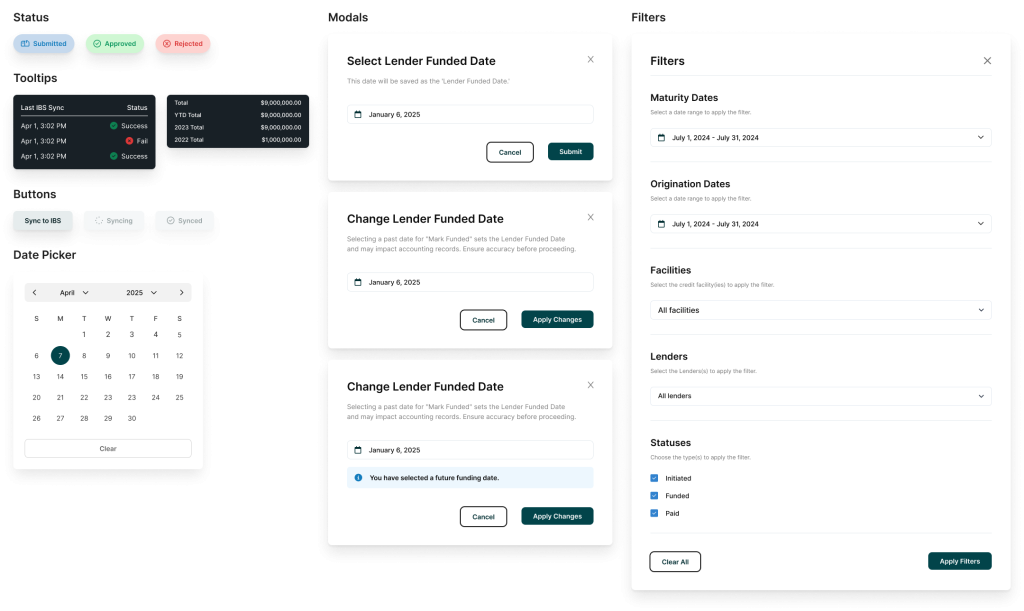
To ensure the platform felt clear and approachable for users with different levels of familiarity, I built the interface around reusable, scalable components that kept interactions consistent across all facility setups, improving accessibility and reducing the effort required to learn the system.
Automate notice creation with a clear, flexible template
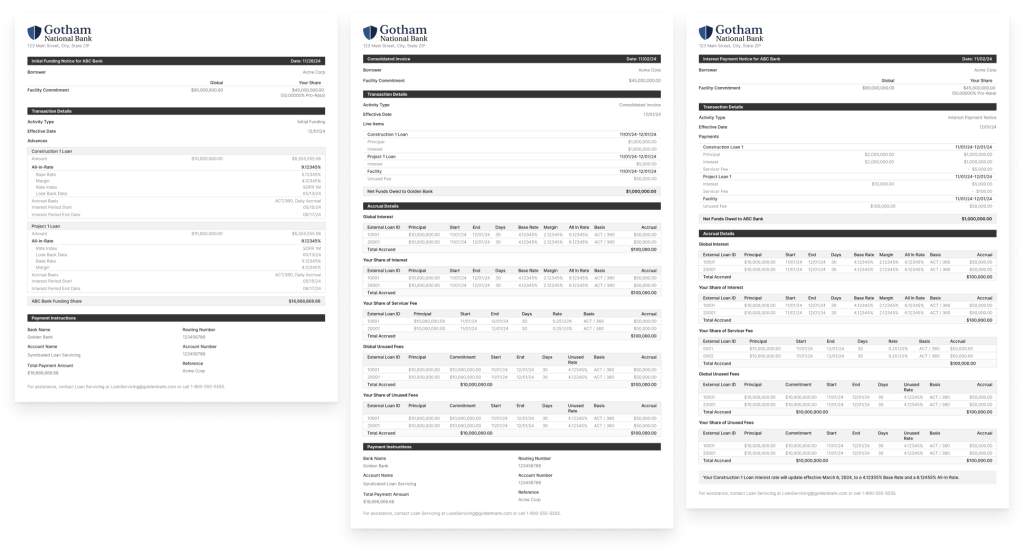
The goal was to reduce manual effort by automating notice creation and designing a flexible template that supports all notice types and edge cases while keeping information easy to scan and clearly organized for review.
FINAL DESIGNS
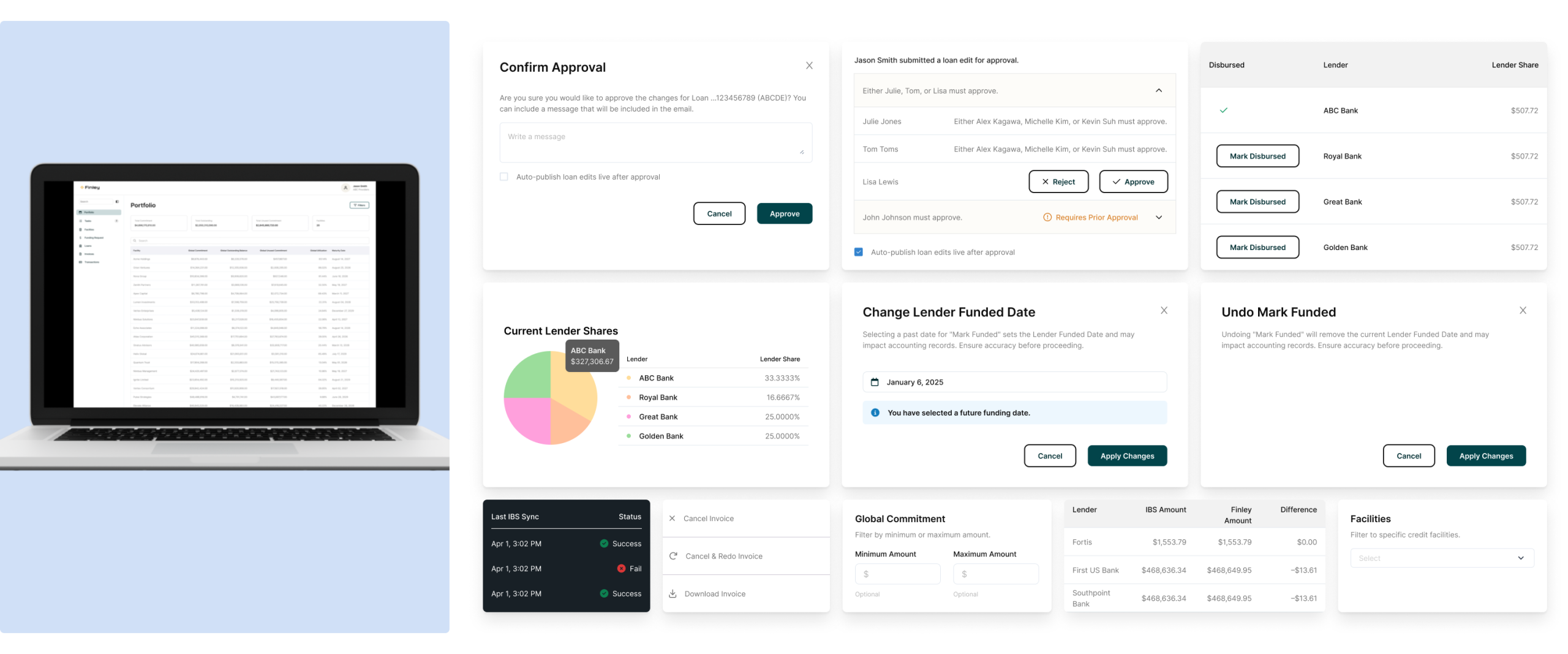
The homepage displays portfolio level metrics, including total commitments, outstanding amounts, unused capacity, and a facility list with global commitments, utilization, maturity dates, and other key details needed to understand portfolio health at a glance.
A focused list of servicing actions requiring attention, with clear priorities and next steps.
A clear, guided flow for entering loan details, confirming inputs, and generating the correct notice.
A consolidated view of key loan data, upcoming actions, and recent activity for quick understanding.
OUTCOMES
Reduced manual work, increased clarity, and enabled enterprise adoption.
Operational Efficiency:
- 95%+ invoice accuracy, up from 40%, improving borrower trust and reducing disputes
- Reduced manual review time from hours to minutes by automating data aggregation from dozens of external feeds
- Enabled automation at scale: Loan servicing teams now generate hundreds of automated invoices and borrower notices weekly
Business Value:
- Millions in annual savings for the client through reduction in third-party servicing costs
- Stronger compliance posture with real-time risk monitoring and improved audit readiness
- Contributed to Finley’s 3x ARR growth
CUSTOMER VALIDATION
Positive feedback from bank leadership.
Feedback from Valley Bank reinforced that the product addressed core servicing needs and created a strong foundation for future scale.
“This new platform allows us to digitize complex collateral and servicing processes with a differentiated speed and quality that aligns with our digital ambitions. Finley has been a terrific partner to work with and their innovative system will provide improved efficiencies, accuracy and timeliness for our debt capital operations.”
— Russell Barrett, Chief Operations Officer, Valley Bank
“This was a true design partnership. Valley came to Finley with a problem statement, and we worked together to build a product that has potential to address needs not only for Valley, but also many other financial institutions.”
— Jeff Allen, Partner at Valley Ventures
REFLECTIONS
Building user trust and accounting for real servicing complexity were critical lessons
Early feedback showed that bank employees hesitated to adopt the new product because they were unsure how the system worked and wanted more transparency into the logic behind servicing actions. Making system behavior clearer earlier in the process would have helped build trust faster.
The work also highlighted that some servicing processes were initially oversimplified. Rebuilding these workflows to match the full complexity of the bank’s operations cost time and reinforced the need to capture nuanced requirements upfront, especially for high impact servicing scenarios.